

Sustainable Pallets: What Decides a Pallet's Environmental Footprint
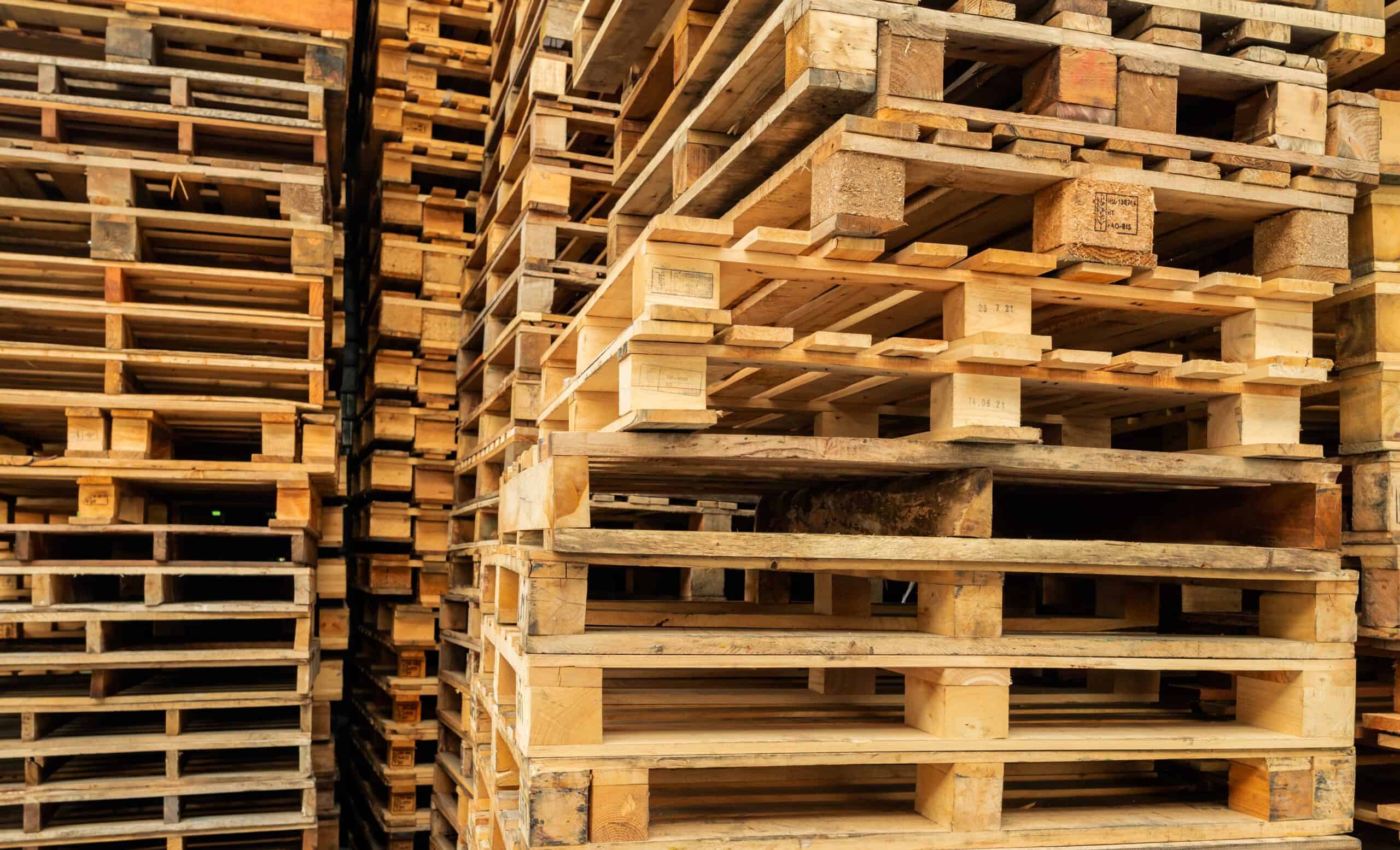
Trip count, weight, and end-of-life handling decide a pallet's carbon footprint, with published figures for wood pallets ranging from -26 to 9.9 kg CO2-eq. We build pallets for operations that ship at volume, and three questions shape every design we hand back: how often does it come home, what does it weigh, and how many empties fit on a return truck.
Key Highlights
- Published life cycle assessments put a single wooden pallet anywhere from -26 to 9.9 kg CO2-eq, a spread driven by reuse assumptions rather than material.
- Wooden pallets are typically modelled at 5 to 30 trips and plastic at 50 to 100, though both figures move sharply with handling conditions.
- EPA recorded a 17.1% wood pallet recycling rate for 2018, measured by tonnage and counting chipping only.
- US wooden pallets carry a UL-certified Environmental Product Declaration developed with the USDA Forest Products Laboratory.
What buyers assume, and what the evidence shows
| What buyers assume | What the evidence shows |
|---|---|
| Sustainability is decided by the material you buy | Trip count governs the result. Published figures for the same material span -26 to 9.9 kg CO2-eq per pallet |
| Plastic lasts longer, so plastic is greener | In a like-for-like GMA comparison, land occupation was the only impact category where plastic came out ahead |
| Pallets are a landfill problem | EPA reports 17.1% recycled by tonnage. The trade body reports roughly 95% recovered by unit count, including repair and reuse |
| Wood pallets drive deforestation | US wooden pallets hold a UL-certified EPD built with the USDA Forest Products Laboratory |
| A greener pallet means a heavier, sturdier build | Weight is a direct per-trip fuel variable, and empty-pallet return freight compounds it |
What Makes a Pallet Sustainable
A pallet is sustainable when it completes many trips, carries its load at the lowest workable weight, and leaves service into a recovery stream instead of a landfill. Material sets the starting point, and those three factors determine where you land.
Buyers are usually surprised by that ordering, and the research is blunt about it. A review of 16 life cycle assessments covering 43 pallets found the climate impact of a wooden pallet ranging from -26 to 9.9 kg CO2-eq depending on how the study handled reuse and end of life. The material is identical across that range, and so is the basic build. What moves the number is how the pallet gets used and where it goes afterwards.
The reviewers also concluded that the right way to measure a pallet is per trip, since carrying cargo is the job it exists to do. Measuring per pallet flatters a heavy, single-use board and penalises a light one built to come back twenty times.
So the buying question shifts. Rather than asking which pallet is green, ask which pallet design survives your handling equipment long enough to spread its build cost across a serious number of shipments.
Are pallets environmentally friendly?
Wood pallets perform well on climate impact when they are reused, repaired, and recovered at end of life. The material stores carbon during growth and takes little electricity to convert into a pallet. A single-use pallet that goes straight to a landfill after one shipment performs poorly, whatever it is made of.
Trip Count: The Number That Governs Emissions
Trip count governs a pallet's emissions because the environmental cost of building it is fixed, while the number of shipments that cost gets spread across is not. A pallet works like a company vehicle. Manufacturing it carries a one-time price in energy and raw material, and every additional run puts that price across more delivered freight.
Published LCA work models wooden pallets at 5 to 30 cycles in most cases, with well-managed pooled stock reaching 90. Plastic typically models at 50 to 100. Handling conditions move those numbers more than the spec sheet does.
Here is the arithmetic in a real setting. A distributor runs the same lane weekly with the same load profile. If each pallet comes back six times instead of three, the build cost lands across twice as many shipments and the per-trip impact roughly halves. That is illustrative arithmetic rather than a measured result, but the direction holds across the literature, and one reviewed study found high-reuse pallets at 30 cycles outperforming low-reuse pallets at 4.4 cycles once impacts were normalised per 1,000 cycles.
Three things kill trip count in the plants we work in. A pallet sized wrong for the racking gets dragged and levered until a board splits. Undersized builds fail at the block once the real load goes on. The third problem is simpler than either: plenty of pallets have no return path at all and never come home.
A repairable pallet matters here too. A damaged wooden deck board gets replaced in minutes. A cracked plastic pallet is out of service permanently, which is why the GMA pallet has held its position in North American distribution for seven decades.
How many trips does a wood pallet make before it leaves service?
Most life cycle studies model wooden pallets at 5 to 30 trips, with pooled and well-managed stock reaching as high as 90. The range is wide because trip count depends on load weight, handling equipment, storage conditions, and whether a repair program exists. A pallet in a closed loop with a repair depot outlasts the same pallet in an open buy-sell market.
Pallet Weight and the Cost of Shipping Empties
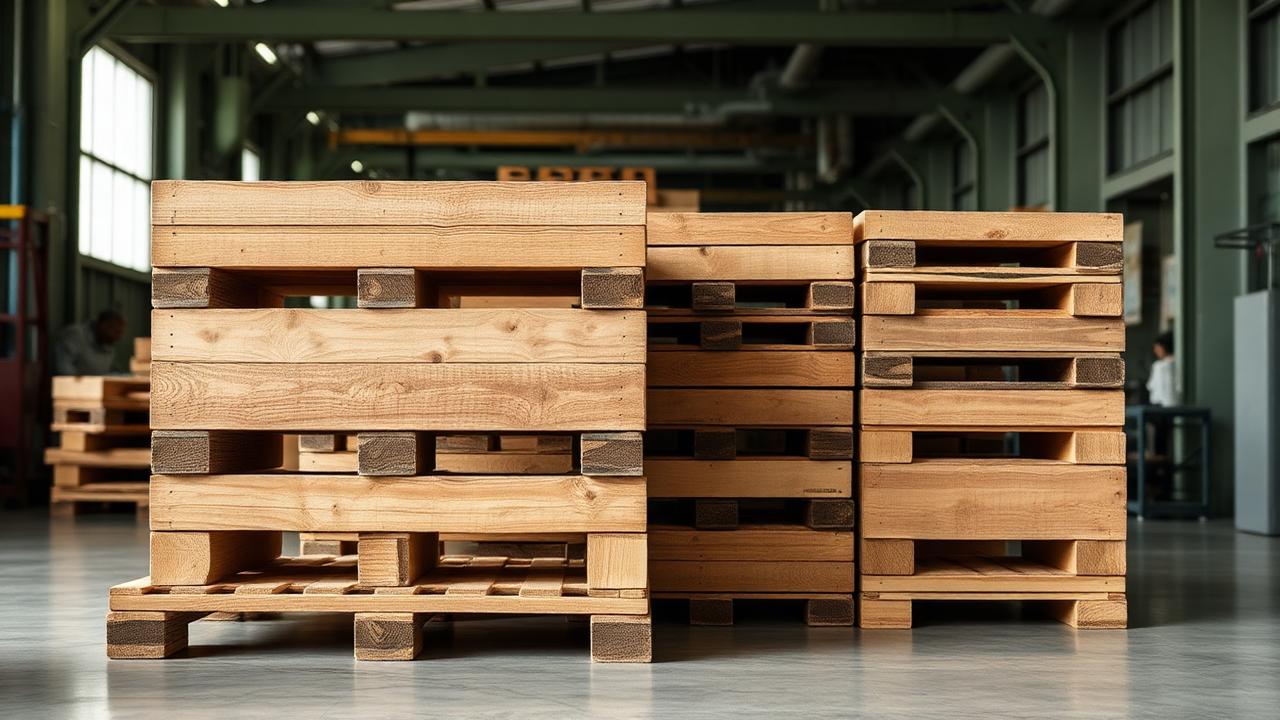
Pallet weight adds fuel to every loaded mile and every empty return, which makes it the second lever after trip count. Freight is charged and burned by weight, and the pallet rides along on both legs of the trip.
Empty returns are where the number gets ugly. A truck carrying empties is carrying nothing but pallets, so the weight and the stacking profile of that pallet set the entire economics of the return leg. Fewer units per trailer means more trailers, more fuel, and more yard space consumed at both ends.
Two design choices move this. Taking material out of the pallet without dropping below the safe working load for the actual cargo cuts weight on every shipment. Designing the pallet to nest or stack tighter when empty cuts the number of return trips outright.
Our GreenBlock system is built around both. Replacing solid wood blocks with engineered blocks pulls lumber out of the build, and the nested profile puts more empties on a trailer. Neither change touches how the pallet moves through a forklift or a conveyor line, which matters because a sustainability gain that slows the floor down does not survive its first quarter.
Weight also feeds directly into the carbon footprint of your supply chain, and it is one of the few packaging variables a shipper controls outright without renegotiating a single carrier contract.
Pallet Materials Compared on Sustainability
Material still matters, and wood leads on climate impact in the published comparisons, with plastic trailing except on land use. Trip count and weight still rank above the material decision.
Wood. Roughly nine in ten pallets in use are wood. Production takes very little electricity, the material stores carbon while growing, damaged units get repaired, and retired stock becomes mulch or biomass. The same review of 16 life cycle assessments that produced the -26 to 9.9 kg CO2-eq range recorded wooden pallet electricity demand averaging well under one kilowatt hour per unit.
Plastic. HDPE and polypropylene pallets survive more cycles and wash down cleanly, which earns them a permanent place in food processing, pharmaceutical production, and cold storage. The climate cost sits in manufacturing. Injection moulding is electricity-hungry by comparison, and virgin plastic pallets in the reviewed studies landed between 22 and 166 kg CO2-eq each. Pallets made from waste plastic scored far better, at 3.7 to 4.1 kg CO2-eq, because the feedstock arrives with no upstream burden attached. In a direct comparison of GMA-sized wooden and plastic pallets, land occupation was the single category where plastic won.
Metal. Steel and aluminium pallets serve defence, aerospace, and chemical handling where load and heat exposure rule out everything else. High embodied energy, long service life, and full recyclability at end of life. Very few distribution operations need them.
Moulded fibre and paper. Light, cheap, and fully recyclable, but poor with moisture and generally built for one way. They suit light goods and air freight, where every pound counts and the pallet is not coming back.
Engineered blocks. These keep a wood pallet's repairability and recovery route while cutting the lumber volume in the build. The approach targets weight and material use instead of swapping the whole platform for a different substance.
For a fuller breakdown of what goes into each build, see our guide to pallet materials and our side-by-side on plastic and wood pallets.
What is a good substitute for pallets?
Slip sheets, roll cages, and returnable plastic containers replace pallets in specific settings. Slip sheets cut packaging weight to almost nothing but need a push-pull attachment on the forklift. Roll cages suit retail and beverage delivery. For general palletised freight moving through standard racking and conveyors, no substitute has displaced the pallet.
Recommended: If your decision is a design change rather than a material switch, start with the block. It carries most of a pallet's weight and almost none of the attention.
See how GreenBlock changes pallet weightThe spec detail sits on the page, and you do not need a quote to read it.
Heat Treatment, Methyl Bromide, and Export Pallets
Wood packaging crossing international borders must be treated and marked under ISPM 15, and the treatment method chosen carries a real environmental difference. ISPM 15 is the phytosanitary standard set by the International Plant Protection Convention, and it exists to stop timber pests travelling with freight.
Two approved routes dominate. Conventional heat treatment brings the wood core to temperature in a kiln. Methyl bromide fumigation uses a gas that is regulated internationally as an ozone-depleting substance and is being phased down or banned outright in a growing list of countries.
For any shipper with an environmental target, that is a procurement decision hiding in plain sight. Ask your supplier which treatment they use and get the answer in writing. Heat-treated stock carries the HT mark inside the ISPM 15 stamp.
Requirements vary by destination country, and some have their own additional rules on top of the standard. Check the current requirement for each country you ship into instead of assuming one treatment satisfies every border.
End of Life: What the Pallet Recovery Numbers Mean
Two credible organisations publish pallet recovery rates that differ by a factor of five, and both are counting correctly. Understanding the difference tells you what to put in a report and what to ask a supplier.
EPA measures by tonnage and counts only material that gets chipped. On that basis, wood pallet recycling ran at 17.1% in 2018, with 3.1 million tons recycled against 18.1 million tons of wood generated in municipal solid waste. Pallets make up more than 90% of all wood packaging in that stream.
The pallet industry measures by unit count and includes repair and reuse, which is where the roughly 95% recovery figure comes from. A pallet that gets a new deck board and goes back into service never appears in a tonnage-based recycling statistic, because it never became waste in the first place.
Neither number is wrong. They answer different questions. The EPA figure tells you how much wood is reaching the chipper at true end of life. The industry figure tells you how many pallets stay in circulation. For ESG reporting, cite whichever one matches the metric you are being asked for, and name the measurement basis alongside it.
Are wooden pallets recyclable?
Wooden pallets are widely recycled and, more often, repaired and returned to service first. Retired stock is typically chipped into mulch, animal bedding, or biomass fuel. Recovery infrastructure for wood pallets is mature across most of the US, and many suppliers run buyback or collection programs that keep units circulating.
Why is burning pallets illegal?
Open burning of pallets is restricted under state and local air-quality rules in most of the US, and the reason is what the wood may carry. Painted, chemically treated, or contaminated pallets can release harmful compounds when burned in the open. Check your state environmental agency for the rule that applies to your site, and route retired pallets to a recycler instead.
Documenting Pallet Sustainability for ESG Reporting
Pallets sit inside Scope 3 packaging emissions, and wood pallets have independently verified documentation available for that reporting. The gap for most shippers is not the pallet. It is the paperwork behind it.
Three documents carry weight with auditors and retail customers.
The industry EPD. In 2020 the Pallet Foundation and the National Wooden Pallet and Container Association, now WoodPack Global, published a certified Environmental Product Declaration for US wooden pallets. UL certified it. The USDA Forest Products Laboratory, the research arm of the US Forest Service, produced the underlying life cycle assessment. This was industry-first for distribution packaging, and it is available to any buyer who wants third-party numbers rather than supplier assurances. One caveat matters: it covers US wooden pallets as a category, not any single manufacturer's product, and it should be cited that way.
Chain-of-custody certification. FSC and PEFC certification trace lumber back to managed forests. Ask whether your supplier holds certification themselves or simply buys from certified mills, because the two are not the same claim.
Your own trip and recovery data. The most defensible sustainability number a shipper has is usually their own. Average trips per pallet, repair rate, and recovery rate say more about actual impact than any material label, and an auditor can follow them.
We are a WoodPack Global member, which means the EPD covers the category we build in. Whether it belongs in your specific report is a question for whoever signs off on your disclosures.
What to Ask a Pallet Supplier
The questions below separate suppliers who engineer pallets from suppliers who sell them out of a catalog. None of them require you to know anything technical in advance.
- What trip count is this pallet designed for under my load and my handling equipment?
- Is it repairable, and do you run a repair or buyback program?
- What does it weigh, and what does that do to my freight on the return leg?
- Which ISPM 15 treatment method do you use, and can you confirm it in writing?
- Do you hold FSC or PEFC chain-of-custody certification yourself?
- Can you show me the safe working load for my actual cargo, not the catalog maximum?
Red flags:
- A supplier who cannot state a design trip count for your load
- Environmental claims with no test standard, certifying body, or document behind them
- A quote given before anyone has asked about your racking, forklifts, or load weight
- Any guarantee about performance that the supplier will not put in writing
Price still matters, and a pallet that fails early is expensive in ways the invoice never shows. Our breakdown of what a wooden pallet costs covers the drivers behind the number.
Key Takeaways
- Trip count outweighs material. Published figures for a single wooden pallet span -26 to 9.9 kg CO2-eq, driven by reuse assumptions rather than what the pallet is made of.
- Plastic durability does not settle the question. In a like-for-like GMA comparison, land occupation was the only impact category where plastic outperformed wood.
- Two recovery rates, both accurate. EPA's 17.1% counts tonnage chipped at true end of life. The industry's roughly 95% counts units recovered, including repair and reuse.
- Third-party documentation exists. US wooden pallets hold a UL-certified EPD built with the USDA Forest Products Laboratory, covering the category, not a single manufacturer.
- Weight is the lever you control outright. It costs fuel on the loaded leg and again on the empty return, with no carrier renegotiation required.
Tell us your load weight, your handling equipment, and how often your pallets come back, and we will tell you which of the three levers is worth pulling first.
Get a pallet design reviewMike and Tim both take these calls directly.
Frequently Asked Questions
Ready to Upgrade Your Pallet Strategy?
Whether you're looking for custom pallets, sustainable solutions, or just better pricing - we're here to help.